What is Subjectivity?
it is the question about who we are. Who we think we are makers and receivers of art. There are 2 key-thinkers of art, which are Sigmund Freud who is based around a psycho analysis, there is also Michel Foucault who is based around Social Power these both play into the power of art.
We next talked about Kaja Silverman, who is the subject of semiotics in 1984. The Subject of Semiotics plays on the word 'Semiotics, as you are doing the talking. Semiotics involves the study of signification.
After we had done this we then talked about Sigmund Freud in more detail, who is mainly based around psycho analysis. I found that this one a good part of the Lecture because I was able to understand in more depth about who Sigmund Freud was and why he is so important to Subjectivity.
Sigmund Freud

Reference-
Sigmund Freud was in 1856, Czech Republic and died in 1939 in Hampstead. Sigmund Freud wrote the book known as The Interpretation of Dreams in 1900, it was known to describe his psycho analysis on the subject of Subjectivity. He also created Unconscious forces like dreams and popular culture. Sigmund Freud considered the dreams to be a royal road. The Unconscious meant an act of dreaming, which was a great discovering of Sigmund Freud. This meant that it marks looking at the capital, so Freud was looking at psychoanalysis. The main discovery that Sigmund Freud made was a main discovery around women, which meant that unconscious produces narrative, this then produces language and a system of signification. An art form is another way of relieving unconscious. Also he said that want and need is the only motivating thing, it is a sign of subjectivity through signs and language.
Subjectivity discourse power.
After this we then looked at the other key thinker of art, which was Michel Foucault, we looked at this in more depth. I found that going to more detail based around Foucault helped me to understand how he is an important part to the topic Subjectivity.
Michel Foucault

Reference-
Michel Foucault says that it is the way in which we use, so we become subject that mean subjectification, this is also called into this identity by subjectivity. Discourse isn't just languages it is a set of practices. The whole set of languages and practices have a historical origin. Michel Foucault was born in 1926, France and died in 1984, France. Michel Foucault wrote many books in his time, the most famous one that he is known for is called The history of Sexuality Vol.1, which was released in 1976. Michel Foucault is a psychoanalysis that says these are illnesses, which is a novelty of Foucault's study of Sexuality.
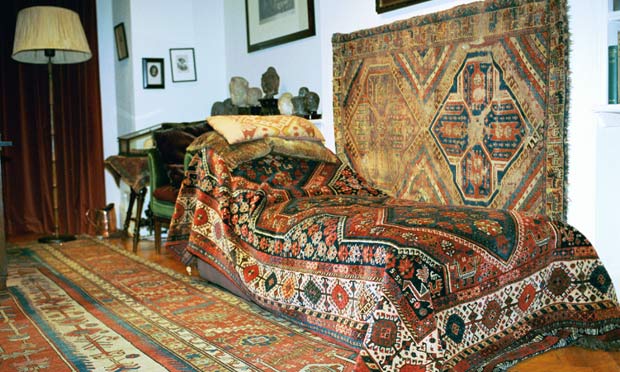
We then looked into Sigmund Freud house, which has just recently become a museum based in his house. Sigmund Freud's couch is a symbol of subjectivity that patients would sit and talk whilst Freud listen, within that hour the psychoanalyst wouldn't say anything.

Reference-
Furthermore in this Lecture we then looked at different designers that was related to Sigmund Freud's house, as we looked at the picture that hangs over the couch in the house by André Brouillet. The picture is of a historical women called Une leçon clinique à la salpêtrière, Paris. In this part of 19th century, women weren't allowed to study medicine. The woman in the picture is known a s Blance Whipman, who is an actress and performed fake hysterical attacks.

Reference-
We then looked at the artist known as Sarah Lucas, who created an exhibition in known as Beyond the Pleasure Principle. Sarah Lucas knows her history of art and has created pictures called Prière de Toucher, which means please touch. Another piece of her work is called the Pleasure Principle, Sarah Lucas is an artist that has full knowledge of a psychoanalyst why it effects art.
I think that overall this Lecture was good because it helped to understand how we think about subjectivity and why it effects us as graphic designer. I think that I am going to take this on board in the future, as I will be able to think about how subjectivity will help me when I design my work in the future.